

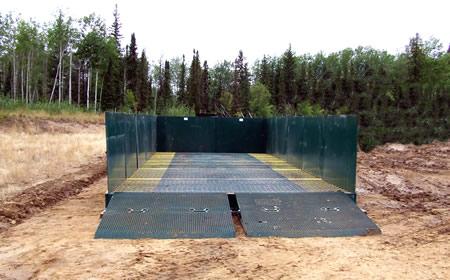
Turnaround projects move quickly, and equipment washing can become a bottleneck if it is not planned early. A heavy equipment wash pad rental gives your site a temporary, contained place to wash vehicles, equipment, parts, and components while keeping wash water controlled.
But not every site needs the same rental setup. The right wash pad depends on what you need to wash, how the equipment will access the pad, whether undercarriage cleaning is required, and how wash water will be collected and removed. In this guide, we’ll walk through the key planning questions to answer before requesting a quote, from equipment type and wash pad configuration to containment, site access, and placement requirements.
What Equipment Will Need to Be Washed?
The right wash pad rental depends on what you will actually use the wash station for. A setup designed for component washing may look different from one designed for service trucks or heavy mobile equipment.
Before requesting a quote, make a basic list of the equipment, vehicles, or components that may need to be washed during the turnaround. This may include:
- Service trucks and contractor vehicles
- Vac trucks and support equipment
- Loaders, excavators, skid steers, or other mobile equipment
- Parts, components, and process equipment
- Valve assemblies, manifolds, and smaller equipment
- Tracked equipment or oversized machinery
- Vehicles with heavy undercarriage buildup
This step helps determine whether the site needs a simple containment pad, a drive-on wash pad, a heavier-duty configuration, an undercarriage wash ramp, or a larger temporary wash station.
What Type of Wash Pad Setup Makes Sense?
Not every turnaround needs the same rental configuration. Some sites only need a contained area for pressure washing components. Others need a full drive-on wash station for vehicles and heavy equipment.
Use the following as a practical starting point:
| Turnaround Need | Wash Pad Rental Setup to Consider |
| Washing parts, components, or smaller equipment | Portable containment pad |
| Washing service trucks or wheeled vehicles | Wash pad with access ramps |
| Cleaning vehicle undersides | Wash pad with undercarriage wash ramps |
| Washing heavy or tracked equipment | Heavy-duty wash pad configuration |
| Managing overspray near work areas | Wash pad with perimeter walls |
| Sites without existing washing equipment | Wash pad with a pressure washer trailer |
| High-volume turnaround washing | Multi-pad temporary wash station |
For many industrial turnarounds, the right solution may be a combination of equipment. A portable wash pad can be paired with ramps, Enviro-Walls, an undercarriage wash ramp, or a pressure washer trailer, depending on the work scope.
Not sure what your site will need? Don’t worry—that’s where we come in. Enviro-Pads has over 20 years of experience designing and supplying equipment wash pads to a variety of industries. Call us today to start discussing your project.
Plan for Wash Water Containment Before Washing Starts
Washing is only one part of the setup. The other part is containment.
Industrial wash water may contain mud, grease, hydrocarbons, process residue, sediment, or cleaning chemicals. That water needs to be captured and managed properly. A temporary wash station should give crews a controlled place to wash equipment while keeping contaminated water away from unprotected ground, storm drains, and other sensitive areas.
Before the rental is confirmed, your team should think through:
- Where will the wash water collect
- How often the pad may need to be pumped out
- Whether a vac truck will need access to the wash station
- Whether the wash area is close to drains, slopes, or traffic routes
- Whether site-specific environmental requirements apply
- Whether washing will involve water only or include degreasers or other cleaning products
In other words, here’s what you should remember: your wash pad creates a contained area, but the broader plan should also account for water removal, disposal, access, and site procedures.
Confirm Site Access and Placement Requirements
A portable wash pad rental still needs the right site conditions. Before delivery, confirm where the wash station will go and how the equipment will move around it.
At minimum, review:
- The proposed wash station location
- Ground conditions and whether the area is level and stable
- Delivery truck access to the setup area
- Gate widths, road access, and site traffic restrictions
- Forklift or equipment availability for placement
- Vehicle entry and exit routes
- Vac truck access for fluid removal
- Proximity to active work areas, drains, buildings, and pedestrian traffic
At Enviro-Pads, our heavy equipment wash pads are easy to set up and can be fully operational within hours of delivery. Simply let us know where you’d like it installed, and we can take care of the rest.
Plan Your Heavy Equipment Wash Pad Rental with Enviro-Pads Today
Turnaround season already comes with enough moving parts. Heavy equipment wash pad rentals should not become another last-minute problem. By planning early, your team can confirm the right wash pad setup, coordinate delivery, prepare the site, and make sure wash water containment is addressed before equipment and contractors arrive. That means fewer rushed decisions, fewer setup issues, and a better chance of keeping the project moving on schedule.
Enviro-Pads provides portable wash pads, containment pads, undercarriage wash ramps, pressure washer trailers, and temporary wash station solutions for industrial projects across Canada. Whether you are preparing for a refinery turnaround, petrochemical shutdown, pipeline maintenance project, or heavy equipment washing program, we can help you plan a rental setup that fits your site requirements. Contact us today to get started!


 THE SOLUTIONS FOR YOUR SOLUTIONS
Primary and Secondary Containment
Made in Canada For All Seasons
THE SOLUTIONS FOR YOUR SOLUTIONS
Primary and Secondary Containment
Made in Canada For All Seasons