

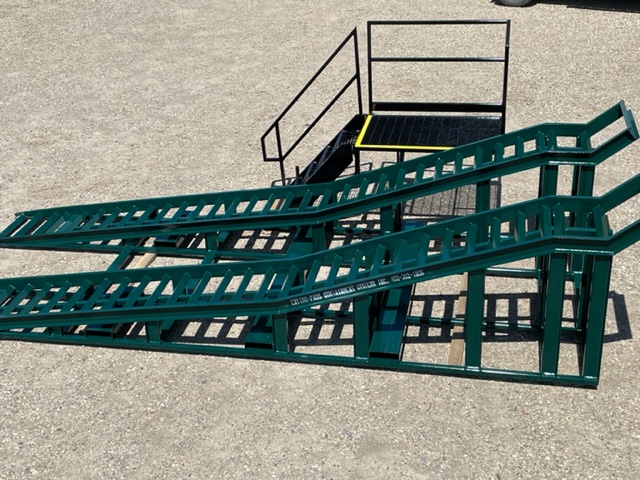
If you are planning a portable wash station for an industrial site, one of the most important questions is whether your setup needs an undercarriage wash ramp. A standard portable wash pad can provide a controlled surface for equipment washing and wash water containment, but it may not provide the access needed to clean the underside of vehicles and heavy equipment.
Undercarriage wash ramps are designed for situations where mud, sediment, grease, hydrocarbons, salt, or other contaminants collect beneath vehicles and cannot be properly removed from ground level. They are commonly used on mining sites, oil and gas projects, construction access points, industrial turnarounds, fleet maintenance yards, and other work areas where track-out prevention and wash water control matter.
Keep reading to learn if you should add undercarriage wash ramps to your site!
Signs You Should Add an Undercarriage Wash Ramp
An undercarriage wash ramp becomes valuable when contamination, access, inspection, or track-out control cannot be handled effectively from ground level.
1. Vehicles Are Carrying Mud, Sediment, or Debris Underneath
Mud and sediment often build up beneath trucks, trailers, service vehicles, and heavy equipment. This is common on industrial construction sites, mining sites, oil and gas projects, pipeline work, landfills, and more.
While important, cleaning the underside of this equipment is often easier said than done. In these cases, undercarriage wash ramps help crews clean hard-to-reach areas and ensure that all debris and harmful contaminants have been removed.
2. Track-Out Prevention Is a Site Concern
Track-out occurs when vehicles carry mud, soil, aggregate, sediment, or contaminants from a work area onto roads, yards, facility access points, or public routes. For sites dealing with hazardous materials, this can cause serious issues and result in groundwater contamination or damage to surrounding ecosystems.
Tires and tracks are part of the problem, but they are not the only source. Material can also collect under the frame, around suspension components, inside wheel wells, and beneath trailers. A surface wash may clean what is visible while leaving the underside largely untouched.
An undercarriage wash ramp helps create a defined cleaning point before vehicles leave the controlled area. When paired with containment, it can support a more complete track-out prevention process.
3. The Site Requires Better Wash Water Control
Washing the underside of a vehicle can release mud, grease, salt, hydrocarbons, process residue, or chemical contaminants. Without containment, that material can move directly onto the ground.
This is why undercarriage ramps are often paired with portable wash pads. The ramp improves access to the vehicle underside, while the wash pad captures the water and debris generated during cleaning.
For industrial sites, this setup is useful when wash water needs to be collected, pumped, filtered, hauled away, or otherwise managed according to the site’s environmental requirements.
4. Crews Need Underside Access for Inspection or Maintenance
Undercarriage washing is not only about appearance. It can also support maintenance and inspection workflows.
Buildup underneath a vehicle can hide leaks, damaged lines, corrosion, worn components, and other issues that crews need to see clearly. Cleaning the underside before inspection can make maintenance work easier and help prevent contaminants from being brought into maintenance areas.
This is especially relevant for service trucks, fleet vehicles, heavy equipment, trailers, vac trucks, and other vehicles that move between field conditions and shop environments.
5. The Wash Station Serves Mixed Vehicle Types
Many industrial wash stations are not used for just one type of asset. A single site may need to wash service trucks, pickups, trailers, heavy equipment, tracked machines, components, and tools.
In that situation, a modular system gives the site more flexibility. A portable wash pad can handle general washing and component cleaning, while an undercarriage wash ramp can be added when vehicles need underside access.
This avoids building a wash setup that is either too limited or too specialized for the actual work being done.
Common Sites That Use Undercarriage Wash Ramps
Undercarriage wash ramps can be used across several types of industrial and commercial sites. They are especially useful where vehicles move between dirty work zones and cleaner roads, yards, or maintenance areas.
Common applications include:
- Mining and aggregate operations
- Oil and gas sites
- Pipeline and utility projects
- Refineries and petrochemical facilities
- Industrial shutdowns and turnarounds
- Construction access points
- Landfills and waste handling sites
- Environmental remediation projects
- Fleet maintenance yards
- Remote field operations
The specific setup will vary by site. A temporary turnaround may only need a short-term rental system. A mine or maintenance yard may need a larger, more permanent wash station. At Enviro-Pads, we specialize in designing and providing the perfect solution, no matter the application. Contact our office today to learn more about available options and how we can help.
Ask Enviro-Pads About Undercarriage Wash Ramps
Need better control over vehicle track-out, wash water, or undercarriage contamination? Enviro-Pads provides portable wash pads, undercarriage wash ramps, and containment solutions for industrial sites, field operations, turnarounds, and heavy equipment fleets. Contact our team to discuss your site requirements and get a wash station setup built around your operation.


 THE SOLUTIONS FOR YOUR SOLUTIONS
Primary and Secondary Containment
Made in Canada For All Seasons
THE SOLUTIONS FOR YOUR SOLUTIONS
Primary and Secondary Containment
Made in Canada For All Seasons