

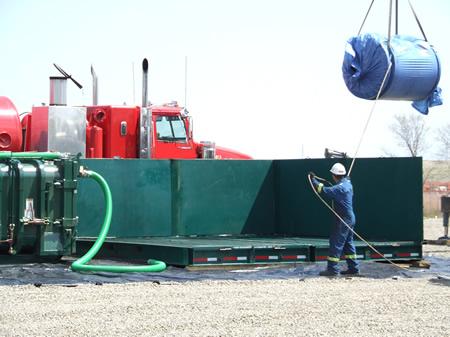
From construction sites and pipeline projects to mining operations and oilfield service yards, heavy equipment works in some of the toughest environments in the industrial world. That’s why most industrial operations rely on consistent heavy equipment washing. But, while this process is essential, it isn’t as simple as spraying down your excavators and calling it a day. Proper heavy equipment cleaning comes with operational challenges, environmental regulations, and more.
Wondering how to clean your heavy equipment effectively, efficiently, and easily? Portable wash pads or wash bays for heavy equipment are the answer. Keep reading to learn more about this solution.
Why Heavy Equipment Cleaning is Important
For industrial operations, it plays a direct role in equipment reliability, safety, and environmental protection.
Heavy machinery operates in environments where dirt, grease, and corrosive materials accumulate quickly. If these contaminants are left in place, they can interfere with moving components and accelerate wear on critical parts.
Routine cleaning helps operations:
- Extend equipment life by preventing corrosion and buildup
- Improve inspection visibility so leaks, cracks, and damage can be spotted early
- Maintain safer worksites by reducing slip hazards and debris accumulation
For companies operating under environmental regulations, proper equipment washing is also essential for preventing oil, fuel, and chemical residues from entering surrounding soil or drainage systems.
Challenges of Heavy Equipment Cleaning
While washing equipment is necessary, it is not always easy to manage on industrial job sites. Traditional washing methods often create operational and environmental challenges that can slow down work or increase compliance risks.
One of the biggest issues is wash water containment. When heavy machinery is cleaned directly on gravel or soil, contaminated water can spread across the site and potentially enter drainage areas. This creates environmental concerns and can trigger regulatory issues if fluids reach nearby water sources.
Space and infrastructure can also be limiting factors. Many sites simply don’t have permanent wash bays large enough to accommodate oversized machines like excavators, dozers, or large haul trucks. Building permanent infrastructure may not make sense for temporary projects or operations that move frequently.
In addition, washing heavy machinery requires equipment that can safely support large loads. Improvised washing areas often lack stable surfaces, which can create safety hazards for both equipment operators and cleaning crews.
How Heavy Equipment Wash Pads Help
Portable wash bays for heavy equipment are designed to solve these problems with one solution. A typical portable wash pad is a modular, above‑grade platform engineered to support the weight of heavy machinery. A grated surface allows water and debris to collect in a contained area while the machine stays on a stable, no-slip platform.
Beneath the surface, the pad is built to capture and contain wash water and solids. As crews wash equipment, dirty water flows into the containment area rather than spreading across the ground. From there, it can be pumped into holding tanks, filtration units, or treatment systems for recycling or proper disposal. This keeps contaminated wash water out of the soil and drainage while also making it easier to meet regulatory and corporate standards.
Choosing the Right Wash Pad for Heavy Equipment
Not all portable wash bays for heavy equipment are the same, so it is important to match the right pad to your equipment and operating conditions. Here are some key things to consider:
Load rating and size
Look at the heaviest machines you plan to wash, including attachments, and confirm the pad’s rated capacity and deck design are suitable. Plus, remember to check the dimensions of your potential solution to make sure there is enough room to safely position equipment, open doors, and work around critical areas.
Equipment Compatibility
Some portable wash pads are designed for rubber‑tired equipment only, while others can safely handle tracked machines like excavators and dozers. Before purchasing or renting your heavy equipment wash pad, confirm whether the surface, grating, and ramps are rated for tracks.
Wash volume and containment capacity.
Estimate how many pieces of equipment you will wash in a typical day and how long each wash will take. From there, choose a pad and containment volume that can handle that demand without constant pumping or downtime. For shutdowns or peak seasons, you may need multiple pads or a larger system.
Site conditions
Gravel yards, paved areas, indoor spaces, or remote locations all have different needs. Consider: where will you be using your wash station? What custom features would be helpful for better operational efficiency? At Enviro-Pads, our portable wash pads are modular and can include ramps, walls, and flexible layouts. If your work moves frequently, our systems can be disassembled and transported easily.
Ownership options
While portable wash pads are worth the investment, the upfront cost can be a barrier for some operations. In these situations, consider a portable wash pad rental to help keep costs low. Additionally, rentals often make more sense for seasonal or remote operations that have no need for permanent infrastructure.
About Enviro-Pads Containment Systems Inc.
At Enviro-Pads, we design portable wash bays for heavy equipment that are built to match the ways you actually work. Our engineered wash pads can be customized to handle very large, very heavy machines, giving you the footprint and load capacity you need. We serve customers across Canada and into the United States, with flexible options to rent for short-term projects or purchase for long-term operations. If you’re ready to bring safe, compliant washing to your site, call our office or request a quote through our website today!


 THE SOLUTIONS FOR YOUR SOLUTIONS
Primary and Secondary Containment
Made in Canada For All Seasons
THE SOLUTIONS FOR YOUR SOLUTIONS
Primary and Secondary Containment
Made in Canada For All Seasons