

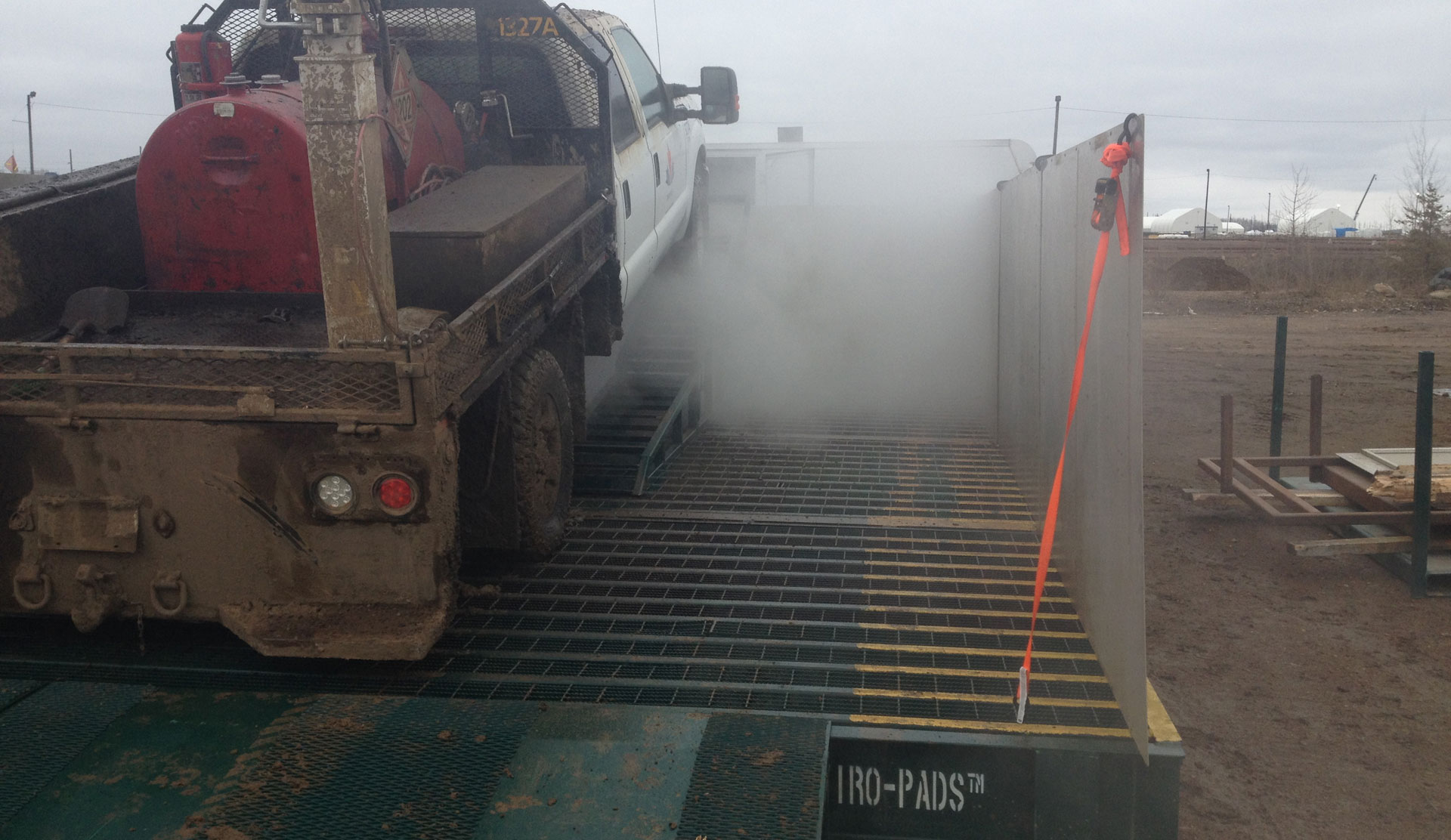
Comparing an equipment wash pad rental invoice solely against a purchase price yields an incomplete financial analysis. Industrial teams must also account for the ongoing operational burdens of equipment logistics, facility storage, and rigorous maintenance cycles between deployments.
A more accurate comparison evaluates the cost per deployment alongside operational accountability. This approach measures actual asset utilization against the long-term readiness burdens required between projects.
That approach keeps the decision practical. Rental can fit temporary or intermittent work, while ownership can make sense for operations with predictable repeat use and the internal resources to manage the asset. Therefore, neither option is automatically cheaper in every situation.
Start with how often you will actually use the wash pad
Utilization is the first filter. A wash pad used repeatedly across an ongoing operation has a different business case from one needed for a shutdown, turnaround, seasonal program or short-term remote project.
Also, low utilization can make ownership less efficient because the asset still needs somewhere to be stored and someone to remain responsible for its condition when it is not generating value on a project. Rental shifts the decision toward a defined deployment period instead.
On the other hand, frequent and predictable use can support ownership, especially when the organization already maintains established logistics infrastructure and dedicated maintenance protocols. The point is to compare the expected operating pattern, not assume that a long asset life automatically makes buying the better choice.
Compare cost per use – not just upfront price
Cost per use gives procurement teams a more complete comparison than acquisition price alone. Also, the calculation does not need a published rental rate or a universal formula to be useful.
For an owned system, compare acquisition, transport, storage, maintenance, cleaning and inspection costs across a realistic number of deployments. For a rental, measure the project rental and mobilization costs against the responsibilities the supplier is taking on.
And the denominator matters. If an owned wash pad is expected to move between many projects, those costs are spread across more useful deployments. On the other hand, if it sits unused for long periods, the effective cost of each deployment can rise even though there is no new purchase invoice.
Enviro-Pads intentionally handles pricing and configuration through project-specific consultation. That makes sense here because transport, accessories, duration, equipment type and site conditions can all affect the comparison.
Who is responsible for inspection and equipment condition?
Ownership means the operator remains responsible for confirming that the wash pad is fit for service between projects. Therefore, damage, wear, storage conditions and previous use can all affect what needs attention before the next mobilization.
Accountability serves as a primary driver for rental decisions. Enviro-Pads inspects and confirms the condition of all rental equipment before dispatch. While the receiving site must operate the system properly, this process effectively shifts the burden of between-project inspections and readiness testing back to the supplier.
Before either renting or buying, review our product specifications for the configuration being considered and confirm that its documented load and setup requirements match the intended equipment.
Decontamination matters between sites
Equipment moving from one industrial site to another may need cleaning or decontamination before redeployment. With that clear, the exact requirement is dictated by the specific contaminants present and the facility’s standard operating procedures, so it should not be treated as a universal regulatory rule.
For an owned wash pad, the owner needs a process for assessing what remains on the equipment after use and what cleaning is required before transport or the next job. This operational phase demands dedicated manpower and rigorous compliance tracking that are easily overlooked in a basic purchase-price comparison.
For rentals, ask the supplier how returned equipment is cleaned, inspected and prepared before it is sent out again. The client’s current process includes decontamination and a clean certificate for rental equipment, but the documentation required for a particular project should still be confirmed before mobilization.
Factor in transportation, storage, and mobilization
Be aware that portable does not mean logistics-free. So, both rented and owned equipment must reach the site, be unloaded, placed and eventually removed. In this case, remote work can make those steps a significant part of the project plan.
Ownership adds the question of what happens between jobs. Teams must secure adequate facility storage while managing the logistical oversight required to keep the system mobilization-ready. Rental can reduce some of that long-term burden, but the project still needs to coordinate delivery access, unloading equipment, ground conditions and setup.
Translating these business decisions into operational execution requires proper setup strategies. For a complete breakdown of configuration logistics and site mobilization, consult our technical guide on how to plan heavy equipment wash pad rentals.
When buying may still be the better choice
Capital purchase becomes the optimal strategy for highly predictable operations backed by robust internal asset management. A team that regularly deploys the same wash setup may value direct control over scheduling and availability.
Ownership is also easier to justify when the organization already has appropriate storage, transport capability, maintenance resources and people responsible for inspection and cleaning. Plus, highly customized recurring applications may also favour ownership because the equipment can remain configured around a known operating need.
Ultimately, the superior financial decision depends entirely on asset utilization and the internal management responsibilities the organization is equipped to handle. The better fit depends on utilization and the responsibilities the organization is prepared to carry over the life of the equipment.
Questions to ask before you rent
Before committing to an equipment wash pad rental, confirm what the supplier will provide and what the site must prepare. Here are some questions:
- What engineering or certification documentation is available for the proposed configuration?
- What load rating and dimensions apply to the exact equipment being supplied?
- How is rental equipment inspected between jobs?
- What cleaning or decontamination process is used before redeployment?
- What accessories are included or available for the application?
- Who is responsible for transportation, unloading and setup?
- What technical support is available if the site requirements change?
For a closer look at the product itself, review Portable Wash Pads. Keep the final configuration decision tied to the actual equipment and project rather than a generic model description.
A critical evaluation of ownership requires assigning specific internal accountability to these hidden tasks. Who schedules inspections? Who decides whether damage requires repair? Who cleans the system after a job, arranges transport, and confirms it is ready for the next deployment? If those responsibilities do not have clear owners, the purchase decision can create operational work that never appeared in the capital-cost comparison.
Procurement can also compare risk around schedule changes. A project that starts late, runs longer than expected, or moves to another location can affect a rental period, while an owned system may be immediately available but still require transport and readiness checks. Therefore, neither outcome is inherently better, and the important point is to include realistic project variability in the decision instead of modelling only the planned dates.
A final comparison should use the same project assumptions on both sides. Compare the same equipment scope, accessories, transport distance, deployment period and site responsibilities so rental and ownership are not being measured against different operating scenarios.
Discuss rental or purchase with Enviro-Pads
If you are weighing rental against ownership, contact Enviro-Pads to align your project timeline and site specifications with the best configuration strategy. A direct conversation can clarify the configuration and responsibilities before you compare the commercial options.


 THE SOLUTIONS FOR YOUR SOLUTIONS
Primary and Secondary Containment
Made in Canada For All Seasons