

Industries that store fuel, chemicals, or hazardous liquids face a constant risk: what happens when a tank leaks, a drum cracks, or a valve fails? That’s where secondary containment comes in. These backup systems are designed to capture and control spills before they contaminate the environment, endanger workers, or put your operation at risk.
In this guide, we’ll break down what secondary containment is, how it works, what requirements apply, and the different systems available.
What is Secondary Containment?
Secondary containment is a backup system designed to capture leaks or spills from primary containers such as tanks, drums, or fuel storage units. As a part of a comprehensive proactive spill containment plan, secondary containment serves a crucial role in preventing the contamination of soil, groundwater, and other nearby ecosystems. In many industries, secondary containment is required by local regulations. We’ll discuss these requirements later on in this blog post.
Primary vs Secondary Containment
As we mentioned, secondary containment often works hand in hand with primary containment. On a basic level, both these solutions serve the same purpose: they contain a hazardous liquid and prevent it from spreading. However, they accomplish this task in different ways. Primary containment (often referred to simply as spill containment) serves as the main holding vessel and directly contains the substance. Common examples of primary containment include fuel tanks, chemical drums and barrels, piping, or intermediate bulk containers. On the other hand, secondary containment acts as a “safety net” and only holds the chemical when the primary unit leaks.
Still not sure of the difference? Think of it this way: the fuel tank holds the diesel, and the spill pallet underneath catches it if the tank leaks. Both layers working together are what keep a minor equipment failure from becoming a major environmental incident. For more information on this topic, read our blog post, which discusses the basics of spill containment, including the importance of a proactive approach.
What are the Requirements for Secondary Containment?
Secondary containment requirements vary depending on your location, industry, and the types of materials stored on site. Both Canadian and U.S. environmental regulations establish standards for how containment systems should be designed, installed, and maintained. Let’s review some of these regulations.
Canada
In Canada, secondary containment requirements are typically governed by federal environmental legislation as well as provincial regulations. For example, the requirements for secondary containment in Alberta are established by both the Environmental Protection and Enhancement Act (EPEA) and the Canadian Environmental Protection Act. While the exact rules vary by province, secondary containment systems in Canada usually must:
- Hold at least 110% of the largest container’s capacity, or 100% of the largest container plus 10% of the total volume stored, whichever is greater.
- Be made from materials compatible with the stored chemical or fuel.
- Prevent spills from reaching soil, surface water, or stormwater systems.
- Remain solid and structurally sound, even when exposed to weather or chemical contact.
- Be regularly inspected and maintained to ensure proper performance.
Additional requirements may apply for specific industries, such as oil and gas, mining, fuel storage, and chemical manufacturing. For example, aboveground storage tank systems may need engineered containment structures, leak detection systems, or drainage controls to prevent contaminated runoff.
United States
In the United States, secondary containment requirements are primarily enforced by the U.S. Environmental Protection Agency (EPA) through regulations like the Spill Prevention, Control, and Countermeasure (SPCC). Typical EPA requirements include:
- Secondary containment must hold the entire capacity of the largest tank plus additional volume for precipitation.
- Containment systems must be able to hold oil for a reasonable period of time.
- Facilities must implement proper drainage controls, such as manually operated valves or oil-water separators.
- Containment areas must be regularly inspected and maintained as part of the facility’s SPCC plan.
- Sites may need engineer-certified spill prevention plans depending on storage capacity.
At Enviro-Pads, all our products are built with both Canadian and United States compliance in mind. If you have further questions about how our secondary containment solutions meet the regulations in your jurisdiction, contact our office for more information.
Common Examples of Secondary Containment
While these products serve the same core purpose, secondary containment isn’t one size fits all. Finding the right option for you depends on your site conditions, the type of hazardous material you handle, and other factors. Let’s review some examples of secondary containment.
Spill Containment Berms
Probably one of the most common examples of secondary containment, spill containment berms are temporary or semi-permanent barrier structures made from flexible materials like PVC or polymer. Typically, they are foldable and easy to deploy, making them the ideal solution for remote operations or temporary sites with limited storage space. There are several types of spill containment berms, including heavy-duty options or models with foam walls for extra containment.
While they are popular and cost-effective, spill containment berms have their limitations. They can be ripped and damaged by heavy equipment and often require careful setup to ensure reliable spill protection. For heavy industrial use, steel spill pallets are typically a better option.
Spill Pallets
Much like berms, spill pallets are used underneath tanks, drums, and IBCs to capture any leaks. However, unlike berms, pallets are rigid, solid, elevated surfaces, making them best for high-traffic locations that require reliable day-to-day containment. Typically, pallets are available in plastic or steel. Choose plastic for light use and indoor applications, or opt for steel for greater strength and durability.
Hazardous Material Storage Buildings
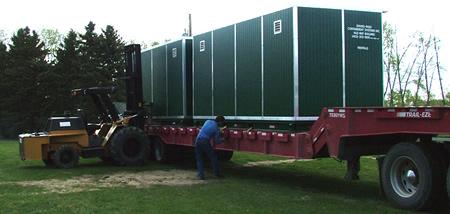
HazMat storage buildings are ideal for sites that need a dedicated, enclosed storage facility for large volumes of chemicals or hazardous materials. These structures use metal spill containment trays as their foundation and add walls, doors, and ventilation to protect materials from weather and unauthorized access. The most comprehensive secondary containment option on this list, hazardous material containment units are best for outdoor sites that deal with regular environmental factors.
Improve Your Site with Secondary Containment Products
Enviro-Pads manufactures spill protection and secondary containment solutions for a variety of industries and applications. Our custom spill containment pads can be used for equipment washing during site turnarounds, portable refuelling stations for remote sites, hazardous material containment for oil and gas operations, and more. Call our office or request a quote through our website today to learn how we can help.


 THE SOLUTIONS FOR YOUR SOLUTIONS
Primary and Secondary Containment
Made in Canada For All Seasons
THE SOLUTIONS FOR YOUR SOLUTIONS
Primary and Secondary Containment
Made in Canada For All Seasons